
A day with…
Christian, Bodywork Technician at Garage M. Losch Bereldange
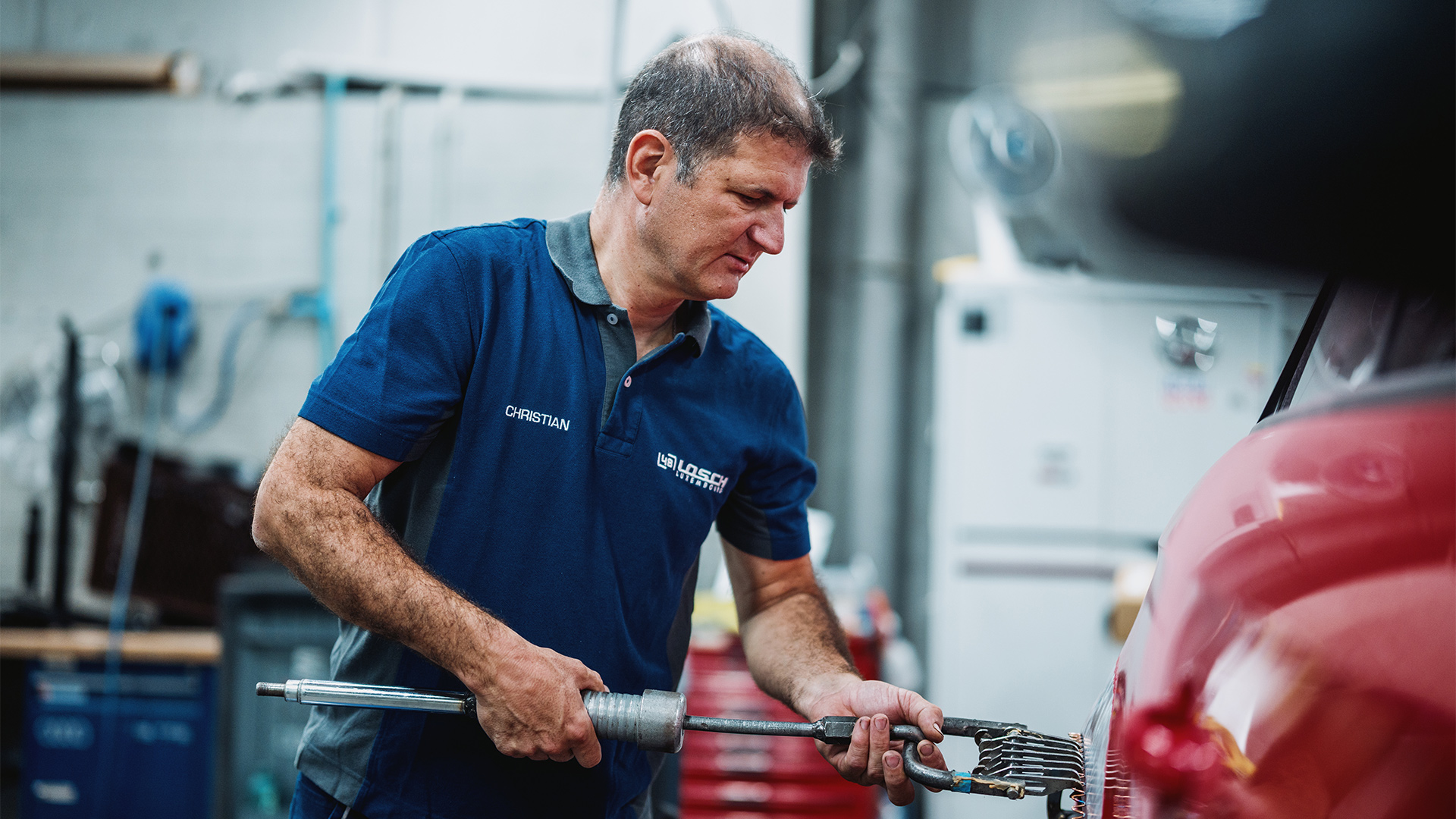
Christian has been working at Garage M. Losch Bereldange since 2002. Over the years, his responsibilities have evolved significantly. Today, alongside traditional bodywork repairs, he mainly deals with complex diagnostics, warranty cases and technical issues.
“The classic image of a bodywork technician no longer reflects the profession today. The job has become much more technical and versatile.”
How did you join Losch Luxembourg?
Back then, I already knew that I would prefer to work for a larger company.
The larger the company, the more opportunities there are to look beyond your own area and continue developing. Since vehicle technology was already evolving very quickly at the time, further training and exchanging knowledge with other specialist areas were important to me.
I first heard about Losch through two colleagues who were already working here. I applied in 2002 and started directly at the Bereldange site.
How has your work evolved over the years?
With experience, my responsibilities have increasingly shifted towards diagnostics and warranty cases.
Today, I often deal with noises, water ingress, tactile complaints or other problems that are difficult to locate.
This specialisation developed naturally over the years. When you repeatedly work on certain types of problems, you eventually build up a great deal of experience in that area.
What does a typical working day look like for you?
It depends a lot on the particular job.
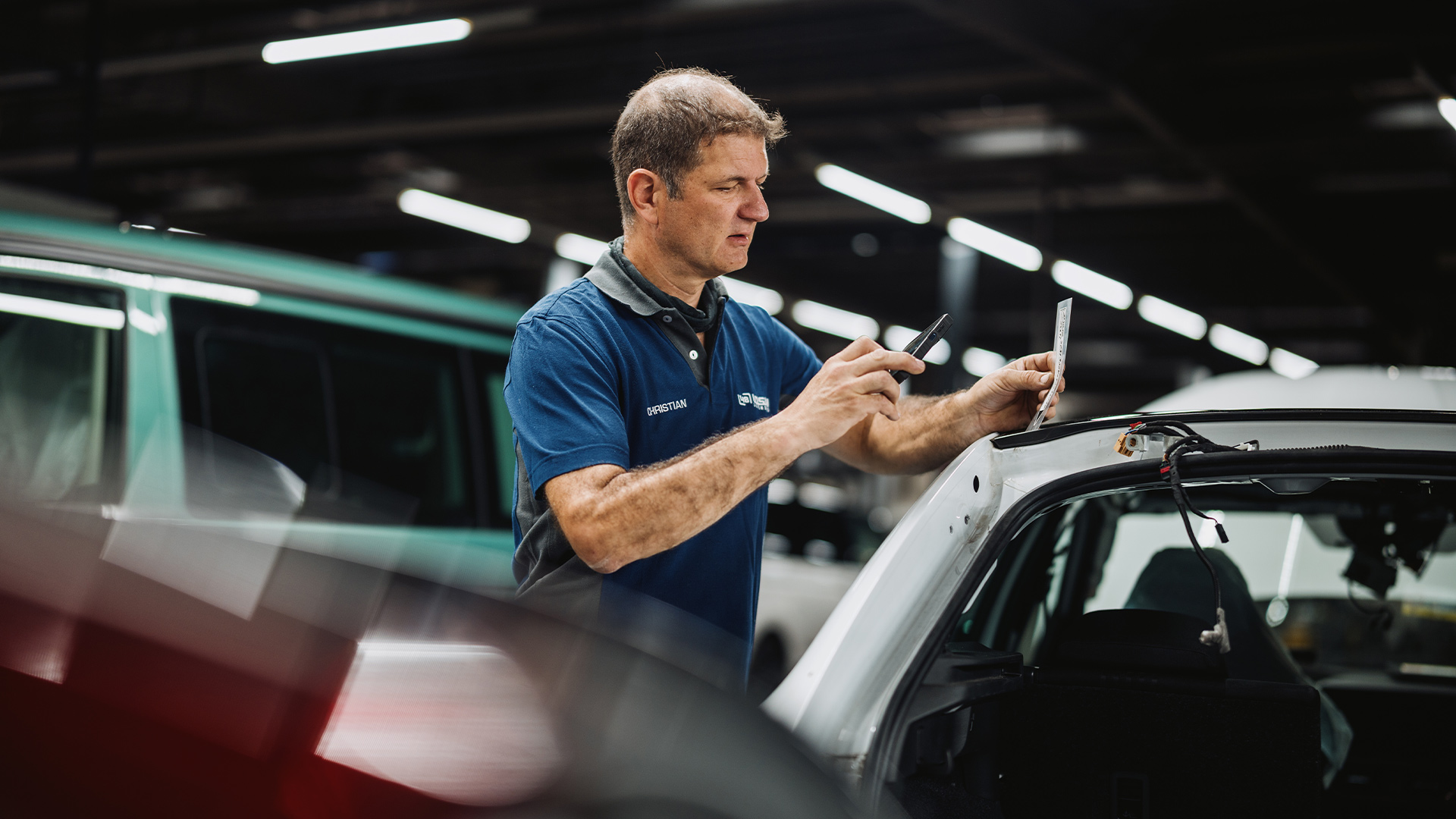
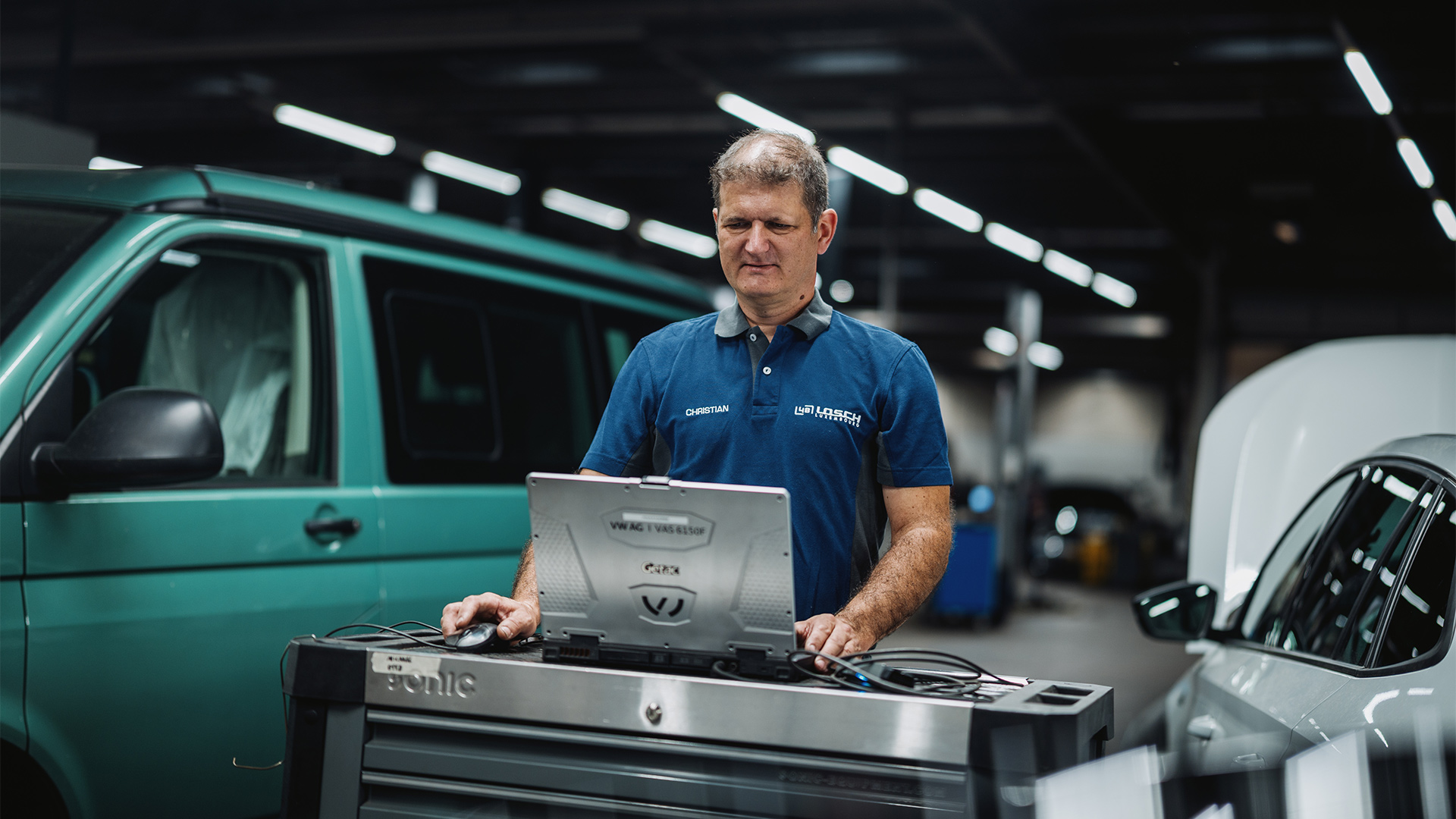
For warranty cases, I first have to identify the problem myself and document everything precisely. This includes descriptions, photos and sometimes videos.
When it comes to noises, direct communication with the customer is particularly important to me. I often go for a test drive with the customer in their own vehicle so they can show me exactly when and under which conditions the problem occurs.
Alongside this, I still carry out traditional bodywork repairs. It is precisely this combination that makes my work so varied.
Are you often in direct contact with customers?
Yes, especially when the problem is more complex.
If a customer has noticed a noise or a specific fault, it is often easier to speak with them directly and go on a test drive together.
This helps me understand exactly what they mean while also allowing me to explain roughly how much time the work is likely to require.
I am also sometimes involved when the vehicle is handed back, so I can explain exactly what was done and where the problem was.
What role does documentation play in your profession?
A very important one.
Warranty cases in particular need to be documented as precisely as possible. The more detailed a report is, the more useful it can be for other workshops and for the manufacturer.
When similar problems occur on several vehicles, these reports can help identify recurring faults and contribute to the development of appropriate technical solutions.
Has the profession of a bodywork technician changed a lot?
Very much so.
The traditional image of a bodywork technician spending the whole day simply straightening or welding sheet metal has long ceased to reflect reality.
Modern vehicles contain a great deal of technology. Sensors, cameras, radar systems, wiring harnesses and different joining techniques are now just as much a part of the profession.
In the past, many components were screwed or welded together. Today, numerous adhesive and joining techniques are used as well.
As a result, you have to keep developing your skills and keep pace with vehicle technology.
Which skills are important in this profession?
Spatial awareness and a good sense of touch are very important.
You often work in places you cannot see directly. You therefore need to be able to visualise how a component is built or where exactly you are working with a tool.
With experience, you also develop a very precise feel for surfaces and materials.
And you can never stop learning. Vehicles are constantly evolving, and as a bodywork technician you have to keep up with that development.
Is the job varied?
Yes, precisely because the technology is constantly changing.
Today, you regularly have to deal with new materials, fastening systems and technical components.
When I think about the fact that I have been in this profession for more than 20 years, it would probably have become boring if nothing had changed during that time.
It is exactly this continuous development that keeps the profession interesting for me.
Is there a job that has particularly stayed with you?
One of my first major jobs at Losch involved an old Rolls-Royce.
Both wheel arches had rust damage. There were no ready-made repair panels available, so I had to fabricate the required sheet-metal pieces myself and recreate the shape.
The vehicle was then painted in Bonnevoie, and I was allowed to drive it there myself.
At the time, that was something very special for me and it is a job I still remember today.
Was there another important moment in your career?
Yes, my project for my master craftsman qualification.
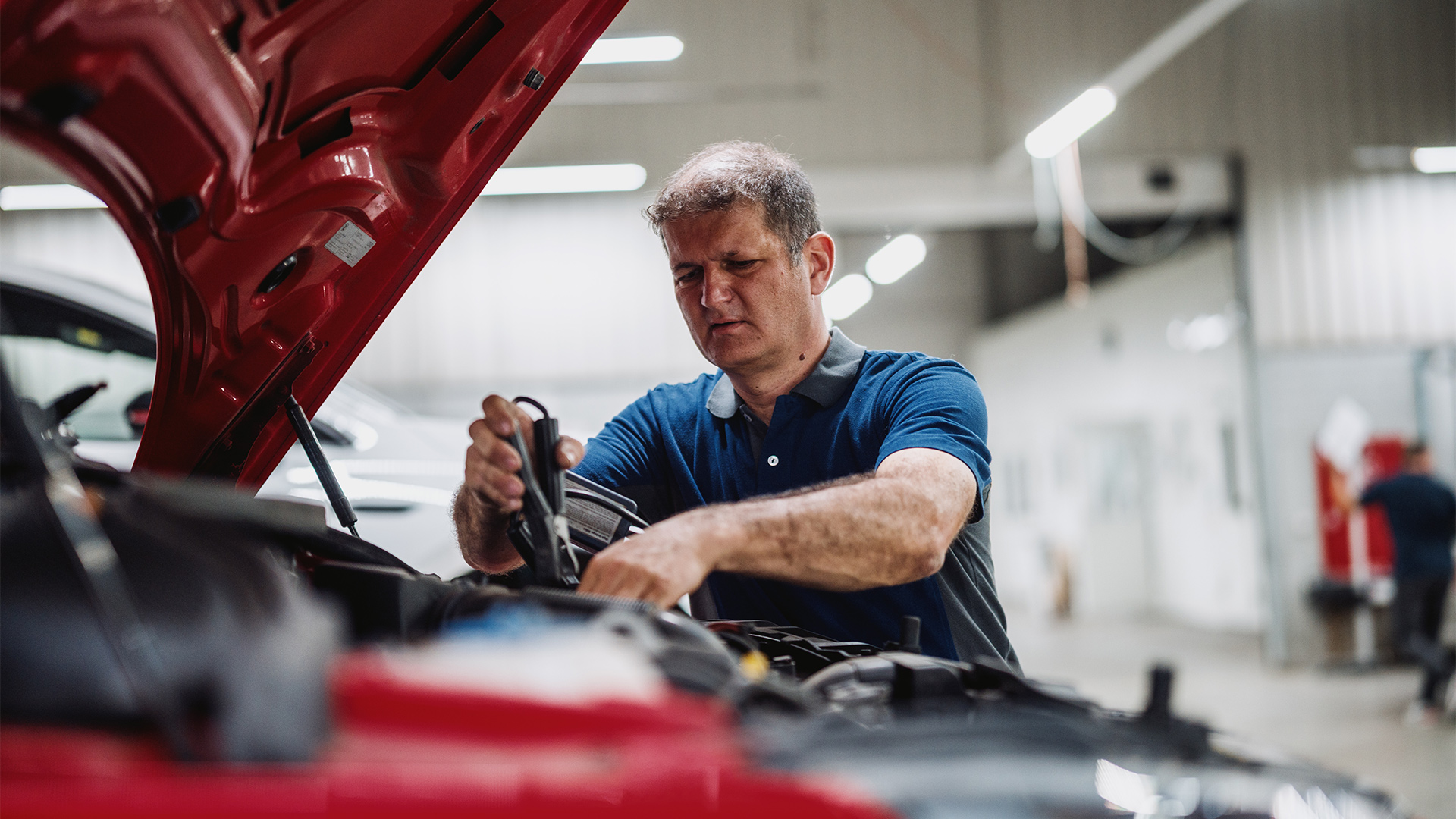
For that project, I bought a damaged Polo and was allowed to repair it here in the workshop. Among other things, I worked on the frame straightening bench, replaced a chassis rail and documented the entire repair.
It was an important step in my professional development and a special experience.
What makes working at Losch Luxembourg attractive to you?
Above all, the size of the company and the wide range of experience and expertise available.
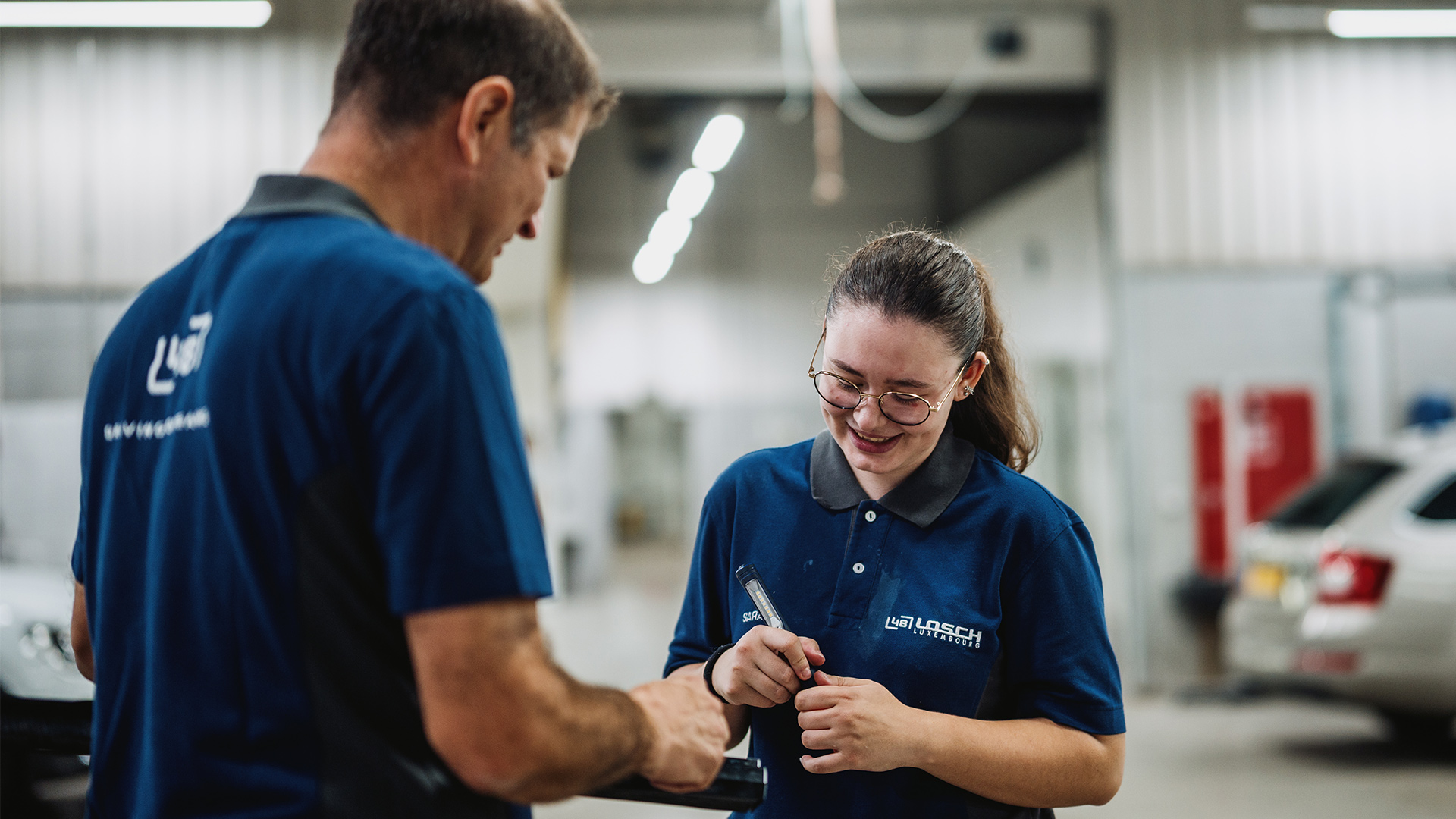
If you have a problem, there are many colleagues with different backgrounds you can exchange ideas with. Some have extensive experience with older vehicles, while others have recently completed training and are particularly familiar with current diagnostic and computer systems.
The variety of brands and the good parts supply are also clear advantages for me.
What advice would you give someone who wants to learn this profession?
You should be aware that the profession is much more technical and extensive today than many people think.
At first, it can seem like a lot. You have to learn about different materials, joining techniques, electronics and vehicle systems.
But you should not be afraid of that. Routine comes with time - anything can be learned.
What is particularly important to you in your profession?
Passion.
In a profession as varied as this, I think simply coming to work and doing the job is not quite enough.
You should be interested in the vehicle, the technology and your own work. In the end, that enthusiasm also shows in the result.